
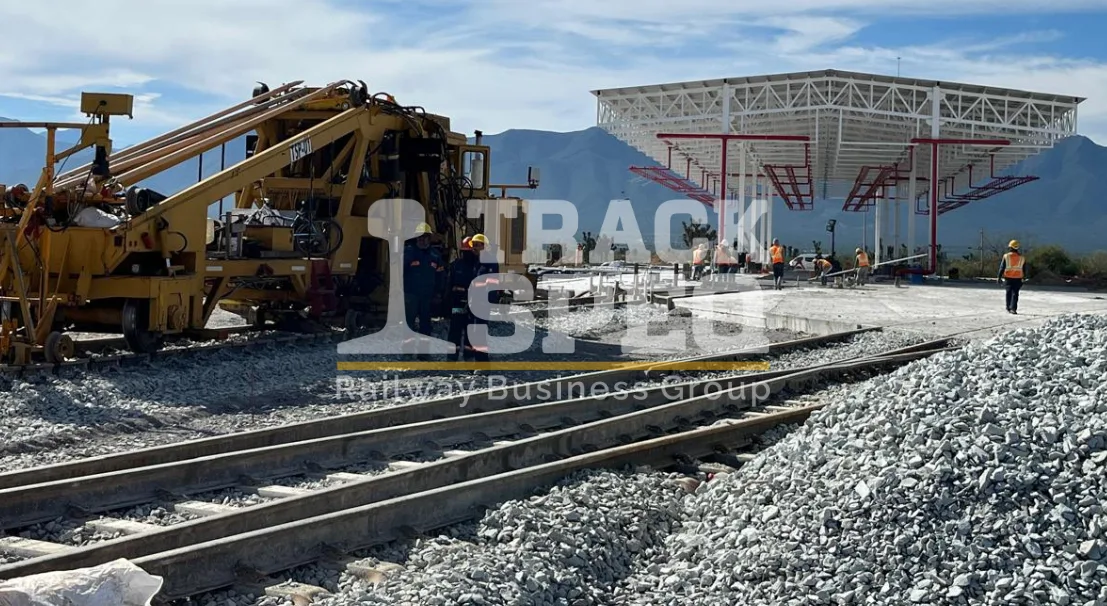
Buying railway ballast shouldn’t be handled like a generic gravel purchase. Although the material seems simple, its performance determines track stability, maintenance frequency, switching safety and the total operating cost of a yard or terminal. In industrial projects, a decision based solely on price per ton can end up raising the real cost through settlement, fines contamination, loss of drainage or the need for early replacement.
The right question isn’t just where to buy ballast, but how to identify a supplier capable of delivering material that meets specification, in sufficient volume, with quarry traceability, verifiable testing and technical support to integrate with the railway design. In Mexico there are material quarries, aggregate producers, industrial distributors and specialized platforms that can participate in the supply chain; however, not all of them have railway experience or understand the differences between a construction aggregate and railway ballast.
This article provides a technical guide for evaluating ballast suppliers in Mexico with a focus on industrial railway infrastructure. The goal is to support better-founded purchasing decisions for procurement, engineering, maintenance and operations management. It also incorporates a total-cost perspective, because ballast isn’t measured only by the price per truckload or per ton, but by its impact on the service life of the railway asset.
Railway ballast isn’t bought like ordinary gravel
Ballast is an angular granular layer placed beneath and around the ties. Its function is to distribute loads, maintain track geometry, allow drainage, create interlocking between particles and stabilize the system against vibration. On a railway track, ballast works every day under repetitive loads, lateral forces and variable environmental conditions. That demand means material selection requires stricter criteria than those used in conventional civil construction.
Commercial gravel may serve a decorative purpose, as fill or as a road base, but that doesn’t make it suitable track ballast. Railway ballast must have controlled gradation, low fines content, high wear resistance, angular shape and stable behavior in the presence of water. It must also be delivered consistently, because mixing lots with different properties can create performance variations within the same project.
For industrial procurement, this difference is critical. A supplier may offer “crushed stone” at an attractive price, but if the material isn’t validated through testing, there’s no guarantee it will withstand the load regime of a rail operation. In industrial yards, freight terminals, spurs and switching areas, the impact of deficient ballast shows up quickly: ties that lose support, soft spots, water accumulation, uneven track and more frequent tamping or geometry correction.
Correct sourcing begins with a clear specification. Before requesting quotes, the buyer must know what type of track will be built or maintained, what axle load will operate, whether there will be frequent traffic, which railroad concessionaire is involved, what the access restrictions are and what quality tolerances apply. Without that information, price comparison becomes incomplete and can lead to the wrong decision.
What a supplier must demonstrate before supplying ballast
A reliable railway ballast supplier must demonstrate more than availability. The first piece of evidence is quarry traceability. This means knowing the rock’s geological origin, the extraction site, the crushing process, screening, stockpile handling and how material contamination is controlled. When the origin isn’t clear or the supplier can’t document its process, the risk of variation between deliveries increases.
The second point is the ability to deliver material that meets specification. For railway ballast, laboratory testing is a central tool. It isn’t enough to state that the material is basalt, granite or high-hardness limestone. Gradation, Los Angeles abrasion, fines content, absorption, particle shape and the presence of deleterious materials must be validated. These results make it possible to compare the material against the standard required by the project, typically aligned with AREMA criteria, railroad concessionaire specifications or particular engineering requirements.
The third point is logistics capacity. In railway projects, supply is rarely handled with a single delivery. It may require continuous volumes, limited unloading windows, coordination with construction, truck availability, scale control, scheduling by work front and documentation by lot. A supplier with good material but unreliable logistics can cause delays and indirect costs greater than the initial savings.
Railway experience also matters. A supplier used to general construction may not anticipate details that do affect a railway project: material segregation in stockpiles, the need to avoid excess fines from handling, access routes to track work fronts, compatibility with spreading machinery, moisture control or documentation acceptance requirements. Experience doesn’t replace testing, but it reduces operational risk during execution.
| Evaluation criterion | What to review | Risk if omitted |
|---|---|---|
| Quarry traceability | Rock origin, extraction, crushing and screening process. | Quality variation between lots and difficulty claiming deviations. |
| Laboratory testing | Gradation, abrasion, absorption, fines and particle shape. | Material unfit for track even if it looks suitable. |
| Logistics capacity | Daily volume, routes, scale, trucks, delivery windows. | Construction delays, cost overruns and incomplete deliveries. |
| Railway experience | Previous projects, knowledge of specifications and documentation. | Non-comparable quotes and supply errors. |
| Technical support | Assistance with specification, equivalencies and validation. | Purchases disconnected from design and maintenance. |
Certifications, tests and documentation worth requesting
In a railway purchase, documentation isn’t red tape; it’s risk control. A minimum technical package should include laboratory results from a representative sample, quarry identification, gradation curve, evidence of quality control and supply conditions. For more demanding projects, additional tests or lot-by-lot validation may be required, especially if the volume is high or the operation will carry heavy loads.
Los Angeles abrasion is one of the most widely used indicators for evaluating wear resistance. A lower value usually indicates greater resistance, although it must always be interpreted together with the rock type and expected field behavior. International railway specifications show reference ranges that can vary by material and application; that’s why it’s best to avoid absolute criteria without reviewing the project standard. Water absorption must also be analyzed, because more porous materials can deteriorate faster under wetting and drying cycles.
Gradation is equally important. Ballast with an excess of small particles can lose drainage capacity from the start. Conversely, a distribution that’s too open or has sizes out of range can hinder seating, reduce stability or create unwanted voids. The gradation curve must meet the specification defined by engineering and remain consistent throughout the supply.
As for certifications, there isn’t always a universal “railway certification” applicable to all quarries. What matters is that the supplier can operate under documented quality controls, testing by reliable laboratories, lot traceability and compliance with the required specification. If the supplier has quality management systems, internal procedures and production records, the purchasing process becomes more robust. For recurring purchases, it’s advisable to carry out technical qualification before making it an approved supplier.
How to evaluate quality without naming brands or relying on sales promises
In a market where many offers can sound alike, the safest way to compare suppliers is to build a technical matrix. The matrix should weigh price, but not make it the only criterion. For a railway project, the unit price only makes sense if it’s compared against the same scope: compliant material, freight included or excluded, distance, delivery times, truck type, minimum volume, documentation, unloading and quality guarantees.
A common mistake is comparing the price of an aggregate at the plant against another delivered to site. Another mistake is comparing untested crushed material against validated ballast. In both cases, the lowest number can be misleading. It’s also common for the buyer to receive quotes in different units: cubic meter, ton, trip, truckload or price per freight. Before deciding, all offers must be normalized to a comparable basis.
Quality must be reviewed at three levels. The first is the laboratory: the material’s results. The second is production: the ability to maintain that quality throughout the supply. The third is expected performance: compatibility with the track, the traffic and the maintenance plan. When a supplier only addresses one of these levels, the evaluation is incomplete.
In industrial projects, where operational continuity is a priority, it’s also worth reviewing responsiveness. If the customer requires additional material due to construction adjustments, corrective maintenance or yard expansion, the supplier must have reasonable availability. A supply that depends on variable inventories can complicate projects with tight schedules.
Hard data: indicative costs and variables that change the real price
The cost of ballast in Mexico varies by region, rock type, specification, volume, haul distance, transportation availability and degree of quality control. As a practical reference for preliminary planning, a basic crushed aggregate may fall in lower ranges, while processed, screened and documented railway ballast may command a quality premium. In industrial projects, freight can weigh as much as the material, especially when the suitable quarry is far from the job site.
For early budgets, it’s reasonable to work with indicative ranges and then finalize figures with formal quotes. Material at the quarry may represent a fraction of the final delivered cost. Once freight, handling, losses, documentation control, testing, unloading and logistics are added, the total cost can change significantly. That’s why a mature decision doesn’t just ask “how much does a ton cost,” but “how much does it cost to have the right material, in the right place, at the right time and with sufficient technical evidence.”
In very general terms, and subject to region and volume, construction crushed materials can be estimated to move within wider ranges, while processed aggregates with specific requirements can rise due to selection, screening and control. For railway ballast, logistics cost is usually decisive: a cheaper quarry farther away can end up costing more than a technically suitable supplier located near the project. In addition, if the material doesn’t comply, the hidden cost appears in replacements, delays, lot rejection and early maintenance.
| Item | Indicative range for planning | Technical comment |
|---|---|---|
| Basic crushed material at the quarry | MXN 150 to 600 per ton | Useful only as a market reference; does not imply railway suitability. |
| Processed ballast to specification | MXN 350 to 900+ per ton | May vary by rock, screening, testing, availability and volume. |
| Regional freight | MXN 150 to 600+ per ton | Depends on distance, route, fuel, access and type of truck. |
| Testing and quality control | Variable cost by laboratory and frequency | Should be included in formal projects to reduce the risk of rejection. |
| Hidden cost of deficient material | Can exceed the initial savings | Includes rework, leveling, replacement, delays and loss of continuity. |
The ranges above should be used as a conceptual guide, not as a quote. In real purchases, price must be validated with quantities, location, specification, delivery windows and unloading conditions. The advantage of working with a specialized supplier or an industrial platform is that the buyer can better structure the request, avoid omissions and compare alternatives on a clearer basis.
Total cost must also be analyzed against maintenance. If a material with a lower initial price generates more fines, drainage is reduced and the track loses stability. This increases intervention frequency, consumes crew hours, requires machinery and can create operating restrictions. In a plant or terminal where every maintenance window affects operations, the initial savings can disappear quickly.
Rail Depot’s role in a more controlled railway purchase
Rail Depot can add value when the buyer needs a more organized way to acquire railway materials and complement supply with technical support. Instead of treating ballast as an isolated purchase, the platform makes it possible to view sourcing as part of a track ecosystem: materials, tools, accessories, small equipment and components related to railway construction or maintenance.
For procurement departments, this reduces friction. A specialized platform makes it easier to find railway products, improves request traceability and allows technical criteria to be integrated from the start. For engineering and maintenance departments, the advantage lies in access to a more specific approach than that of a generic aggregate supplier. In projects where ballast is part of a rehabilitation, yard expansion or spur construction, complementary supply of fastenings, plates, track tools, signaling or safety components may also be required.
Promoting Rail Depot shouldn’t be understood as a substitute for technical analysis, but as a way to professionalize purchasing. The buyer still needs a specification, quantities and delivery conditions; the difference is that they can rely on a channel more aligned with the railway sector. That alignment helps avoid errors in technical language, scope omissions and purchases that seem economical but don’t meet the operational need.
In organizations with digitized purchasing processes, a specialized platform can also integrate better into internal workflows. When the customer requires recurring purchases, approvals, controlled catalogs or traceability, the value isn’t only in the unit price, but in process control. For railway materials, that control translates into less improvisation and greater consistency.

Material supplier, railway supplier and technical partner: they’re not the same
One of the most important decisions is distinguishing between three levels of supplier. The material supplier delivers aggregates. The railway supplier understands specifications, documentation and track conditions. The technical partner helps connect purchasing, engineering, operations and maintenance. In simple projects, the first level may seem sufficient. In industrial projects, terminals, yards or spurs with critical operations, the third level reduces risk.
The material supplier may be adequate if there’s already a finalized specification, a validated quarry and an internal team capable of managing quality and logistics. The railway supplier adds value when the customer needs support interpreting requirements, qualifying materials or coordinating supply with other track elements. The technical partner is relevant when the ballast decision affects design, drainage, construction sequence, maintenance or operational continuity.
Track Speq operates precisely at that intersection: infrastructure, materials, equipment and rail operations. That comprehensive vision makes it clear that ballast isn’t purchased in isolation. Its performance depends on the cross-section design, subgrade quality, tie type, expected load, yard switching, drainage, maintenance and how the work is executed. When all these elements align, the result is a more stable track and an operation with less exposure to failures.
For the industrial buyer, this difference translates into more precise questions. It’s not about ordering “so many tons of stone,” but about validating whether the material is fit for railway use, whether it will be delivered under control, whether the supplier can sustain the volume and whether there is support to avoid incompatibilities. That purchasing maturity improves the relationship between procurement, engineering and operations.
How to put together a request for quotation that actually helps compare suppliers
A well-structured request for quotation avoids ambiguity. It should state the delivery location, estimated volume, unit of measure, required specification, project type, schedule, access conditions, testing needs, freight responsibility and unloading conditions. If this information is missing, suppliers will quote based on different assumptions and the offers will be difficult to compare.
It’s also worth requesting alternatives. In some regions, the ideal material may be farther away, while a technically acceptable material may be nearby and offer a better total cost. The evaluation should review performance, not just a theoretical preference for one rock type. For high-demand lines, heavy-load yards or areas with complex drainage, a superior material may be justified. For secondary sections or controlled applications, the specification can adjust the balance between cost and performance, provided engineering approves it.
A good RFQ should explicitly request technical evidence. This includes the gradation curve, abrasion test, absorption, fines content, quarry identification, validity of results and sampling conditions. If the supplier can’t provide this information, the risk should be reflected in the evaluation. In a formal purchase, the absence of documentation can weigh more than a minor price difference.
The buyer must also define how the material will be verified upon receipt. Acceptance shouldn’t depend solely on visual inspection. For significant volumes, lot sampling, document validation and weight control are recommended. If the material arrives contaminated, segregated or out of size, there must be a clear rejection or replacement mechanism. These conditions must be agreed upon before deliveries begin.
The most common mistakes when buying ballast for railway tracks
The most common mistake is treating ballast as a commodity. When it’s bought on price alone, variables that affect the real cost are lost from view. Another mistake is assuming that any crushed stone will work. Visual appearance can’t confirm strength, absorption, gradation or behavior under load. It’s also common to leave freight out of the initial comparison, which distorts the budget.
A second group of mistakes occurs during logistics. The material may leave the quarry in acceptable condition but become contaminated during stockpiling, loading, transport or unloading. If it gets mixed with soil, fines or material meant for another use, its performance is compromised. That’s why stockpile management and truck cleanliness also matter. In projects with multiple deliveries, size segregation can create zones with different behavior within the same track.
The third mistake is disconnecting the purchase from future maintenance. Lower-quality ballast may get the initial construction done but increase later interventions. In industrial yards, where switching is repetitive, starting and braking forces accelerate wear. If the track loses level or becomes fouled, correction is needed, which means work windows and disruption to the operation.
The fourth mistake is not involving engineering from the start. Procurement can negotiate price, but engineering defines performance. When both departments work separately, there’s a risk of acquiring material that doesn’t match the design. Best practice is to align specification, budget and availability before closing the purchase order.
When to buy through a specialized platform and when to request technical support
A specialized platform like Rail Depot is useful when the buyer is already clear about the material or needs to integrate several railway inputs into a single sourcing flow. It also works well for recurring purchases, complementary materials, tools, accessories and components associated with track maintenance. In these cases, the platform provides order, traceability and access to a catalog focused on the railway sector.
Technical support is advisable when the project is in the design stage, when there’s no finalized specification, when material quarries are being compared, when the volume is high or when the operation will have special demands. It’s also recommended if the track belongs to an industrial plant with critical switching, if there will be interaction with railroad concessionaires or if the cost of an operational failure is high.
In practice, both approaches can be combined. First the material and supplier are technically validated; then the purchase is structured efficiently. This model reduces improvisation and allows the customer to move forward with greater control. For companies with internal audits or rigorous procurement processes, having documentary support also improves sourcing governance.
The advantage of an ecosystem like Track Speq and Rail Depot is that it connects needs that are usually managed separately. The project may require ballast, but also track maintenance, inspection, tools, spare parts, signaling, training or switching equipment. An integrated vision helps reduce scattered suppliers and build a more coherent sourcing strategy.
Supply quality is reflected in daily operations
The impact of a good ballast purchase shows in operations. Track with suitable material holds its geometry better, drains more efficiently and requires fewer corrective interventions. This is especially important in yards where rail switching depends on precise moves, turnouts in good condition and stable surfaces for operating personnel.
Safety also benefits. Fouled or degraded ballast can create unstable zones, water accumulation or loss of support. Although the risk doesn’t always appear immediately, it builds up over time. In railway infrastructure, many failures are progressive: first there’s loss of level, then more vibration, then accelerated wear and finally the need for major intervention. Buying better from the start helps avoid that chain.
From a financial perspective, technical purchasing protects CAPEX and reduces pressure on OPEX. CAPEX is put to better use because the project starts with suitable materials. OPEX decreases because maintenance becomes more predictable. In industries where rail logistics connect production, warehousing, shipping or receipt of raw materials, this stability has strategic value.
That’s why a ballast supplier should be evaluated as part of the overall performance of the railway asset. Its responsibility doesn’t end when the tons are delivered; it begins when the material becomes part of the track. A good purchasing process takes that reality into account and makes decisions with a life-cycle view.
Regional planning: the nearest quarry isn’t always the best, but it almost always defines the budget
Geography plays a decisive role in ballast supply. In Mexico, the availability of competent rock changes by region, and that variation is reflected in cost, delivery times and ease of qualification. A project in the Bajío region doesn’t face the same conditions as one in the north, in a port area or in an industrial corridor near volcanic rock quarries. That’s why supply planning should start with a map of potential quarries rather than a generic price list.
The regional analysis should consider three decision radii. The first is the technical radius: quarries with material that can meet the specification. The second is the logistics radius: quarries that can deliver the required volume within the schedule. The third is the economic radius: quarries whose delivered cost is competitive after adding freight, handling and quality control. The ideal supplier lies where these three radii intersect.
It’s also worth reviewing the season. Transportation availability, rainfall, the condition of access roads and demand for materials from other projects can change actual delivery capacity. In railway projects, delaying ballast supply can halt subsequent activities such as tie placement, alignment, leveling, tamping and releasing a section. A marginal saving on material loses its meaning if it causes weeks of construction delay.
For larger-volume purchases, the customer can negotiate phased scheduling. This avoids overloading the work front, reduces the risk of contaminated stockpiles and allows better quality control by lot. The supplier must understand this dynamic and not simply deliver loads without coordination. Ballast logistics is part of railway execution, not an ancillary service.
Differences between purchasing for new construction, rehabilitation and maintenance
Not all ballast purchases have the same objective. In new construction, the material is part of the track’s initial structure and must align with the complete design: subgrade, sub-ballast, drainage, ties, rail and design loads. In rehabilitation, the challenge is different: the condition of the existing material, the degree of fouling, the need for partial or total removal and compatibility between new and remaining material must be evaluated. In maintenance, the purchase is usually more targeted, but no less technical for that.
For new construction, the specification must be defined before quoting and the supplier must validate that it can sustain the volume. If the project requires thousands of tons, an initial sample isn’t enough; it must be confirmed that the quarry maintains the same quality throughout the supply. In rehabilitation, the analysis should consider whether it’s better to clean existing ballast, supplement with new material or replace an entire section. Each alternative has different effects on CAPEX, OPEX and intervention time.
In maintenance, the risk is buying material just “to get by.” This may solve a specific spot but introduce a material that’s incompatible with the rest of the track. If the size, hardness or behavior of the new ballast differs too much, irregular transitions can occur. That’s why even small purchases must retain technical criteria. An industrial yard with well-planned preventive maintenance doesn’t wait for the material to fail; it schedules replenishment, corrects drainage and controls fouling.
These differences also affect Rail Depot’s role. For recurring maintenance, the platform can enable faster and more organized purchases. For major construction or rehabilitation, it can be integrated into a broader strategy in which Track Speq reviews specifications, quantities, supply sequence and complementary materials. The key is for the purchase to respond to the type of intervention and not to a one-size-fits-all logic.
How to turn a ballast purchase into an ROI decision
The return on investment in a railway track doesn’t depend only on building more cheaply. It depends on operating with fewer interruptions, reducing unplanned maintenance and maintaining safe conditions for moving railcars. Ballast directly contributes to that outcome because it’s the medium that helps preserve track geometry. When geometry deteriorates, the operation becomes slower, more expensive and riskier.
To evaluate ROI, scenarios can be compared. In the first scenario, the customer buys lower-priced material, without complete documentation and with inexpensive freight, but within a few months requires level corrections, additional cleaning or replenishment. In the second, the customer buys validated material at a higher initial price but reduces interventions over the operating cycle. The real difference lies in maintenance hours, track availability, machinery use, crews, delays and possible operating restrictions.
In industries with recurring rail freight, an out-of-service track can affect receipt of inputs, shipment of finished products or railcar turnover. That impact can far exceed the difference between two ballast quotes. That’s why operations management and finance must view the material as part of the logistics system. The question isn’t just how much it costs to buy, but how much it costs if it fails prematurely.
A practical way to incorporate ROI into the decision is to assign a value to operational continuity. If a terminal moves railcars every day, every maintenance window has a cost. If a plant depends on rail for raw materials, every restriction can create safety stocks or alternative transportation. Better-specified ballast doesn’t eliminate all risks, but it reduces an important source of variability.
Warning signs during quotation and material receipt
A serious supplier can answer technical questions clearly. When a quote avoids specifying the quarry, gradation, unit of measure or delivery conditions, it’s time to stop. Lack of detail can turn into a dispute at receipt. It’s also a warning sign when the supplier offers an “equivalent” material without testing or claims compliance based only on photographs. For railway ballast, visual evidence is insufficient.
Another warning sign is a large price variation without technical or logistical explanation. A very low price may be due to proximity, available volume or operational efficiency, but it may also reflect off-spec material, excess fines, mixed sizes or lack of control. The evaluation should request a breakdown: material, freight, handling, testing, minimum volume and validity. When the supplier can’t separate these components, the comparison loses precision.
During receipt, the team should check cleanliness, presence of fines, excessive moisture, soil contamination, out-of-range sizes and consistency between loads. If the material is stockpiled on site, the location must be prepared to prevent mixing with soil or debris. Good material can lose quality through poor handling. This is one of the reasons logistics must be coordinated with engineering and construction, not just procurement.
When in doubt, sample. The cost of a test is lower than the cost of placing unsuitable material and removing it later. In projects with demanding standards, the inspection and test plan should be established from the purchase order. This protects the customer and also the supplier, because it defines clear acceptance rules.

What information the customer should share to receive an accurate proposal
The accuracy of a proposal also depends on the information the customer provides. When the request arrives incomplete, the supplier has to assume conditions, which leads to later discrepancies. To avoid this, it’s advisable to share the exact project location, type of access, schedule restrictions, estimated volume, desired timeline, unloading method, available technical specification and basic data on the rail operation. With that information, the quote can come much closer to the real cost.
If the project is located inside a plant, access may be more complex than at an open job site. There may be safety requirements, induction for drivers, entry hours, internal scales, traffic permits or maneuvering restrictions. All of that affects time per trip and therefore logistics cost. If it’s omitted, the initial price may change during execution. The same happens when the site doesn’t have enough space to stockpile material or when unloading must be done within narrow windows.
It’s also useful to indicate how the ballast will be used. Material for a low-speed track is not the same as for a yard with intensive switching, a heavy-load spur or a terminal with continuous operation. This information makes it possible to recommend more appropriate levels of control and anticipate whether additional validation is required. When the supplier understands the application, it can better guide the solution and avoid a generic offer.
For recurring purchases, the customer can build a technical file for the approved material. That file brings together the specification, test results, authorized quarry, logistics conditions and acceptance criteria. Over time, this reduces purchasing times, avoids rework and allows maintenance to request material with greater certainty. For companies with several plants or terminals, this approach can become an internal railway sourcing standard.
When ballast is part of a broader track purchase
In many projects, ballast doesn’t come alone. The same project may require ties, fastenings, measuring tools, track accessories, bumping posts, signaling, small equipment or materials for turnouts. When each item is purchased separately from disconnected suppliers, the administrative burden increases, as does the risk of incompatibilities. An integrated approach allows quantities, times and supply priorities to be reviewed in a more orderly way.
This point is especially relevant for maintenance. A crew may need ballast to correct a spot, but also track gauges, tools, spare parts or safety components. If sourcing is fragmented, the work is delayed even if the main material is available. Rail Depot helps concentrate part of that railway ecosystem and makes it easier for the buyer to think not only about the isolated input, but about the complete execution of the job.
Integrated purchasing also improves budget planning. Instead of opening urgent requests for each component, the company can forecast consumption, schedule replenishment and build an internal catalog of recurring railway materials. This reduces reactive purchasing and strengthens preventive maintenance. For operations where the track is a critical asset, that supply discipline is as important as the ballast’s technical specification.
A good purchase starts with a technical conversation
Buying railway ballast in Mexico requires balancing availability, cost, specification, logistics and support. It’s not about finding the cheapest supplier or naming market players; it’s about building a process that makes it possible to select the right material and receive it with controlled quality. For an industrial buyer, the best decision is one that completes the project without shifting problems to future maintenance.
When the project is still in the evaluation stage, it’s advisable to review the specification before requesting quotes. When there’s already an immediate need, it’s advisable to validate whether the available material is fit for railway use. And when the company seeks to organize its sourcing, Rail Depot can serve as a specialized channel for integrating railway purchases more clearly, especially when materials, tools and complementary components are required.
Track Speq can support the technical definition of supply, specification review, supplier qualification, integration with Rail Depot and materials planning for railway construction or maintenance. For an initial review, you can contact the team at ventas@trackspeq.com, call +52 81 1600 5603 or visit en.trackspeq.com. Purchasing decisions improve when procurement, engineering and operations work from the same technical foundation; in railway infrastructure, that alignment translates into safety, continuity and a better return on investment.
