
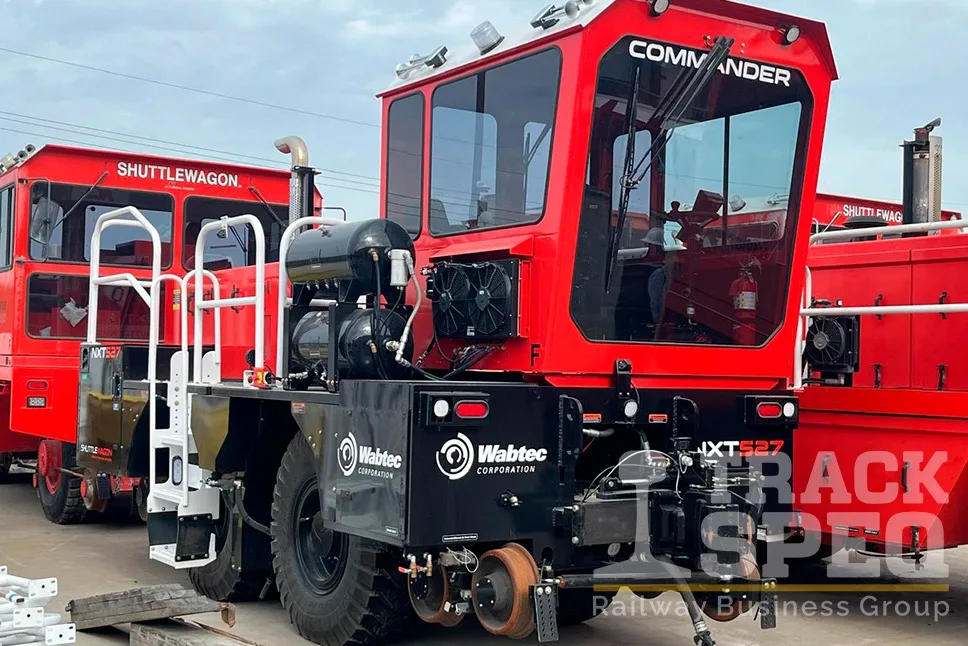
A Shuttlewagon that breaks down in the middle of a switching window is not just a maintenance problem. It is a direct interruption to freight flow, yard scheduling, and the productivity of the entire operation. That is why having specialized Shuttlewagon technical service should not be seen as a reactive expense, but as an operational decision that protects availability, safety, and continuity.
In industrial terminals, logistics yards, and operations with high car turnover, the railcar mover works under very specific demands. It is not enough for a technician to have a general knowledge of engines, hydraulic systems, or electrical components. What is needed is specific experience in rail switching, an understanding of how the equipment behaves under load, and the judgment to diagnose failures without wasting time on unnecessary tests. That is where the difference lies between repairing and truly sustaining an operation.
What specialized Shuttlewagon technical service involves
Specialization is not just about responding to breakdowns when the equipment stops working. In an industrial railway environment, specialized technical service starts from in-depth knowledge of the Shuttlewagon’s architecture and its traction, braking, coupling, transmission, electronic, and operational safety systems. It also requires familiarity with actual operating conditions in the plant, such as intensive switching, dust contamination, short repetitive cycles, ramps, internal crossings, and load variations.
When that knowledge exists, diagnosis reaches a different level. It becomes possible to distinguish whether a loss of performance stems from normal wear, poor calibration, operation outside parameters, or a larger developing problem. This reduces downtime, prevents incorrect replacements, and allows intervention before a minor failure ends up affecting the railcar mover’s availability.
Another key point is technical traceability. Equipment like a Shuttlewagon requires a maintenance history, tracking of operating hours, control of critical spare parts, and clear inspection criteria. Without that order, decisions become reactive. With it, asset management becomes more predictable.
Why it should not be treated as generic maintenance
In many operations, the first temptation when an issue arises is to turn to a general repair shop or to in-house staff with broad mechanical experience. In certain isolated cases, that can take care of basic tasks. However, when the equipment is critical to switching, that route usually has very clear limits.
The first is time. A non-specialized provider takes longer to identify the root cause, relies on trial and error, and may not have intervention procedures tailored to the equipment. The second is technical risk. An apparently correct repair can leave misadjustments that affect traction, safety, hydraulic response, or reliability in continuous cycles. The third is hidden cost. Prolonged downtime or a recurring failure almost always costs more than specialized service from the start.
There is also an operational factor that is often underestimated. The Shuttlewagon does not work in isolation. Its performance affects internal tracks, platforms, loading and unloading, yard personnel, auxiliary tractors, and logistics commitments to the end customer. That is why every hour out of service has a ripple effect.
Specialized Shuttlewagon technical service and operational continuity
For an operations or maintenance manager, the right question is not just who can repair the equipment. The question is who can sustain its availability in a real production environment. That nuance changes the approach entirely.
Specialized Shuttlewagon technical service adds value when it combines corrective service with preventive maintenance, scheduled inspections, wear monitoring, and support in planning shutdowns. If the provider understands the terminal’s logic, it can adapt interventions to the available windows and prioritize actions according to criticality. This reduces interference with daily operations.
In addition, specialization makes it possible to work with sound judgment on critical components. Not all elements have the same impact or the same urgency. There are parts whose wear can be tolerated for a short period and others that must be addressed before the next heavy switching move. Knowing the difference avoids both overinvestment and unnecessary exposure to failure.
At this point, supply capability also matters. Solid technical support is not limited to sending a technician to the site. It must be able to back the intervention with the right spare parts, technical documentation, and post-repair follow-up. If any of those pieces fails, the service is incomplete.
What a company should evaluate before hiring a provider
Not all maintenance offerings provide the same level of support, even if they use similar language. To evaluate truly specialized technical service, it is worth reviewing several aspects with an industrial mindset.
Direct experience with Shuttlewagon is the first. It is not just about knowing railway equipment in general, but about having serviced this type of railcar mover under comparable operating conditions. The second point is response capacity. A provider may be technically competent, but if it lacks the structure to mobilize service, spare parts, or follow-up, specialization loses its practical value.
The scope of service should also be reviewed. Some operations only require occasional service, while others need maintenance contracts, condition monitoring, operator training, and ongoing support. Choosing well depends on how dependent the plant is on the equipment and the impact a prolonged outage would have.
Documentation is another indicator of maturity. Clear technical reports, prioritized recommendations, intervention history, and replacement criteria make it possible to make decisions based on evidence rather than intuition. For technical purchasing and plant management, this makes it easier to justify investment and plan budgets more accurately.
The value of integrating technical support, spare parts, and operations
When equipment service is fragmented among several providers, friction appears. One party diagnoses, another quotes parts, another schedules the intervention, and no one takes a complete view of the asset. In demanding rail operations, that dispersion usually translates into delays, duplication, and greater exposure to error.
That is why it is especially useful to work with a partner that understands rail switching from a comprehensive perspective. If the provider knows the infrastructure, the yard’s needs, the railcar mover’s behavior, and spare parts availability, it can act with greater precision. It does not just repair; it also helps organize the equipment’s maintenance strategy within the operation as a whole.
This integration is relevant in Mexico, where many industrial terminals need to solve maintenance, supply, operational compliance, and service continuity all at once. In that context, Track Speq provides a clear advantage by combining railway expertise, execution capability, and specialized support as the exclusive Shuttlewagon representative in the country.
When to move from a reactive to a preventive approach
Many companies make the leap to preventive maintenance after a costly breakdown. That is understandable, but it is not the best time to start organizing equipment management. The recommended course is to get ahead of it when the railcar mover has already become critical to moving freight, when frequency of use increases, or when the plant depends on very tight logistics windows.
There are clear signs that the reactive model is falling short: an increase in minor incidents, loss of power during switching, ever-longer response times, irregular consumption of components, and difficulty planning shutdowns are some of them. They do not always mean an imminent failure, but they do indicate that operational risk is growing.
Moving to a preventive approach does not mean over-maintaining the equipment. It means intervening methodically, establishing useful inspection routines, and acting on what really affects availability and safety. In terms of total cost, it is usually a more efficient decision than waiting for the next critical shutdown.
A technical decision with commercial impact
In an industrial rail operation, the reliability of the Shuttlewagon affects much more than the maintenance department. It affects service levels, customer commitments, yard productivity, and the ability to absorb demand peaks. That is why choosing specialized technical service is not just a tactical purchase. It is a decision that protects revenue, operational reputation, and growth capacity.
The best support is not the kind that shows up only when something breaks, but the kind that understands how to keep the operation from stopping. When specialized Shuttlewagon technical service is approached with that logic, the equipment stops being a source of uncertainty and starts working as what it should be: a reliable asset within a demanding rail chain.
If your operation depends on moving cars with precision, safety, and a steady pace, it deserves technical support to match.
