
What are the best railway ballast brands available in Mexico?
The short answer: you don’t buy brands, you qualify materials and suppliers
When an industrial company asks what the best railway ballast brands available in Mexico are, the technical answer starts with an important clarification: railway ballast doesn’t work like a catalog product with a dominant brand, standard warranty and universal specification. Unlike a rail, a fastening, a measuring instrument or a railcar mover, ballast is a crushed stone material whose quality depends on the source quarry, the rock’s geology, the crushing process, gradation sorting, washing, fines control, lot traceability and the supplier’s real ability to maintain consistency throughout the project.
That’s why in Mexico it isn’t enough to ask “which brand is best,” but rather “which quarry and which supplier can deliver ballast that meets the project’s technical specification, in the required volume, with laboratory evidence, reliable logistics and performance compatible with the rail operation.” That difference completely changes the way you buy. A supplier can offer an attractive price per ton and still represent a risk if the material degrades, contains excess flat or elongated particles, doesn’t drain properly, varies between loads or can’t sustain delivery during critical construction windows.
In practical terms, the available options fall into three categories: producers specializing in railway ballast, quarries or aggregate pits capable of producing to railway specification, and distributors that integrate supply, transportation, testing and documentation. The best decision isn’t reached through general reputation, but through an evaluation matrix that combines specification, regulatory compliance, location, delivery capacity, quality control, logistics cost and railway experience. For industrial projects, switching yards, spurs, terminals and rehabilitations, this approach reduces the risk of premature failure and avoids turning an initial saving into a maintenance cost overrun.
Why ballast defines the stability of a railway track
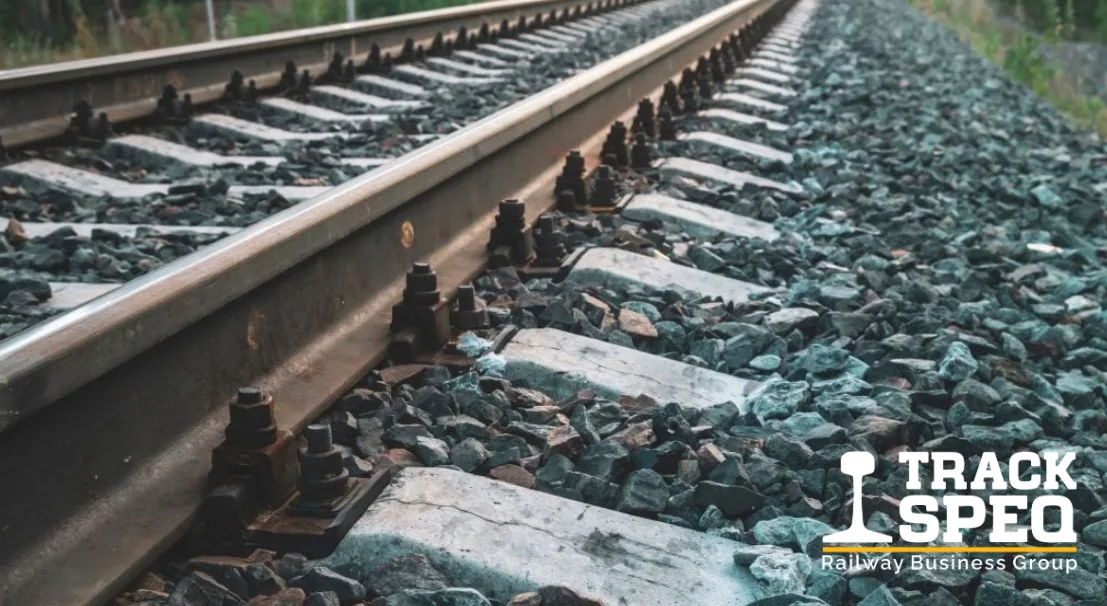
Ballast is the granular layer that works beneath and around the ties. Its function seems simple, but its behavior is decisive for the track’s geometric stability. It receives vertical, lateral and longitudinal loads; distributes them to the substructure; allows the track to drain; helps maintain gauge, level and alignment; and absorbs part of the vibration generated by passing rail equipment. If the ballast loses its interlocking capacity, becomes fouled with fines or degrades through internal crushing, the whole track starts to require more maintenance.
On an industrial track, the problem doesn’t always appear with high-speed trains. It appears with repetitive switching, braking, starting, pushing, pulling, changes of direction, low-speed movement with loaded railcars and moves through turnout areas. These conditions produce concentrated stresses that accelerate material degradation if the ballast doesn’t have adequate strength, angular shape and gradation. A track that seems robust at the time of construction can lose its level within a few months if the ballast wasn’t selected with railway criteria.
Ballast also has a direct relationship with operational safety. When the material becomes fouled, retains moisture or loses drainage, the likelihood of differential settlement increases. When it breaks down excessively, it generates fines that reduce voids and hinder water drainage. When the material is rounded or weak, the tie loses confinement and the track can shift laterally. That’s why ballast shouldn’t be viewed as “crushed stone,” but as a structural component of the railway track.
From a total-cost perspective, ballast is one of the elements with the greatest influence on the frequency of tamping, leveling, replenishment, cleaning and geometry correction. A suitable material can extend maintenance cycles; a deficient one can generate constant corrective interventions. In industrial operations, each intervention can mean shutdown windows, rescheduling of railcars, disruption to loading and unloading, coordination with the railroad concessionaire and risk of delays. Ballast selection therefore affects infrastructure, switching, safety, OPEX and logistics continuity.
Mexican regulations and standards that should guide the purchase
The selection of railway ballast in Mexico should start from recognized technical specifications. The reference framework usually combines guidelines from the railway authority, railroad concessionaire requirements, project-specific specifications and international technical practices. Mexican standard NOM-003-ARTF-2019, published for the Mexican rail system, includes references to ballast sizes and specifications, and the technical guidelines of Mexico’s Rail Transport Regulatory Agency (ARTF) establish gradation categories that must be verified through testing. Concessionaire criteria and technical documents such as the specifications for in-plant industrial tracks are also consulted.
Internationally, many engineering firms use AREMA as a reference for ballast physical properties, gradation and expected performance. AREMA shouldn’t be seen as a commercial label, but as a basis for technical control. What matters is that the supplier demonstrates, with laboratory results, that the material meets the required gradation curve, resists wear, maintains angularity and doesn’t contain contaminants or fines beyond tolerance.
Critical tests usually include gradation, Los Angeles abrasion, absorption, specific gravity, soundness, flat and elongated particles, fines content and petrographic analysis when the project requires it. In more demanding projects, it’s advisable to add lot validation, sampling frequency, documentation control, quarry traceability and field verification upon receipt of material. A simple data sheet doesn’t replace a quality assurance plan.
The standard and the laboratory, however, aren’t enough if they’re disconnected from the operation. A yard with heavy traffic, turnouts, tight curves, grades, liquid loading areas or areas with complicated drainage requires a stricter reading. The specification must consider not only the minimum acceptable, but the expected performance over the asset’s service life. This approach avoids accepting materials that “pass” a one-time test but can’t withstand real switching conditions.
Types of suppliers available in Mexico and how to compare them
In Mexico there are specialized producers, aggregate quarries able to adjust to railway specifications, traders that integrate supply and transportation, and suppliers listed in industrial directories. There are also quarries that openly advertise their ballast production for railway projects; for example, Cantera Villa Rica appears in railway sector directories as a producer of high-quality ballast nationwide and mentions types of ballast associated with regulations. This type of reference can be useful as a starting point, but it doesn’t replace technical qualification.
Supplier directories such as QuimiNet or other industrial portals can help identify potential companies that sell ballast for railroads. However, their information should be treated as preliminary. For a railway decision, the commercial listing must become a formal pre-evaluation process: request for a data sheet, quarry location, monthly capacity, project history, recent tests, extraction permits, crushing method, gradation control and logistics conditions.
Geographic location is a decisive factor. Ballast is heavy and of low relative value per ton compared with transportation cost. A technically sound quarry can lose competitiveness if the distance to the project increases too much. Conversely, a nearby quarry may not be advisable if its rock doesn’t meet strength requirements or if its process produces too many fines. The best option is usually the one that balances technical quality, distance, volume, logistics reliability and documentation capability.
For industrial procurement, it’s advisable to separate suppliers into three tiers. Tier one includes railway suppliers with proven experience, laboratory results and continuous supply capacity. Tier two includes aggregate quarries that can produce ballast to specification, provided they accept controls, sampling and traceability. Tier three includes intermediaries or commercial sources that require full validation before being considered. Price per ton should only be compared between technically equivalent options.
Technical criteria for deciding which ballast is best
The first criterion is gradation. Railway ballast must have a size distribution that creates stability, sufficient voids for drainage and confinement capacity around the tie. If the material is too uniform, it may seat poorly or embed into lower layers. If it contains too many fines, it loses permeability and retains moisture. If it has an excess of small particles, it compacts in an undesirable way and reduces its drainage capacity.
The second criterion is wear resistance. Los Angeles abrasion is a common test for estimating an aggregate’s ability to resist fragmentation and wear. In a track, ballast is subjected to repeated loads, vibration and contact stresses. If it fragments quickly, it generates fines; those fines reduce drainage and require cleaning or replenishment. The abrasion result shouldn’t be analyzed in isolation, but it is an important sign of likely performance.
The third criterion is angularity. Ballast needs fractured faces and edges that produce interlocking. A rounded particle moves more easily; an angular particle helps the whole work as a stable matrix. For yards with switching, turnouts and braking zones, angularity is especially relevant because it helps resist lateral and longitudinal forces.
The fourth criterion is durability against moisture and environmental changes. Absorption, soundness and mineralogical composition help anticipate how the rock will behave over time. Materials that degrade with wetting cycles or have internal fractures may seem suitable at first and fail later under operation. In regions with heavy rainfall or soils with complex drainage, this variable becomes more important.
The fifth criterion is cleanliness. Ballast must arrive free of clays, soils, organic matter and contamination. A contaminated supply can compromise drainage from day one. On site, material handling must also be controlled to avoid mixing with existing soil, mud or construction debris. Quality doesn’t end at the quarry; it continues through loading, transport, stockpiling, spreading and compaction.
How to evaluate a “brand” or supplier with a decision matrix
A decision matrix makes it possible to turn supplier comparison into an objective process. For railway ballast, it’s recommended to evaluate at least seven dimensions: technical compliance, documentary evidence, supply capacity, logistics performance, railway experience, engineering support and total cost. Each dimension should be weighted according to the project. In an urgent rehabilitation, availability may weigh more; in a new terminal, long-term consistency may weigh more.
Technical compliance means the material meets the specification defined by engineering. Simply declaring “railway ballast” isn’t enough. The supplier must provide up-to-date laboratory results, gradation curves, quarry origin, rock type, crushing method and quality controls. When the project is highly critical, it’s advisable to take independent samples and validate results with an outside laboratory.
Documentary evidence includes reports, certificates, production logs, lot traceability and delivery records. This documentation protects the buyer and facilitates construction acceptance. In projects involving railroad concessionaires or internal audits, the absence of evidence can become a problem even if the material appears physically suitable.
Logistics capacity must be analyzed in detail. The supplier must demonstrate how many tons it can deliver per day or per week, what loading equipment it uses, what routes are available, what time restrictions exist, how it will handle demand peaks and what plan it has for rain, equipment failures or transportation congestion. Good material that arrives late can also generate cost overruns.
Technical support distinguishes a strategic supplier from a mere vendor. A supplier capable of coordinating sampling, resolving specification questions, adjusting gradation, planning deliveries and collaborating with engineering reduces project friction. In rail operations, that capability can be as valuable as the material itself.
CAPEX vs. OPEX: the mistake of choosing by price per ton
Ballast purchasing is usually analyzed from a CAPEX standpoint because it’s part of the initial construction or rehabilitation investment. However, its real impact appears in OPEX: maintenance, geometry corrections, replenishment, cleaning, track availability and operational continuity. Low-quality ballast can reduce the initial cost and multiply the operating cost over the following years.
Price per ton is an incomplete metric. To compare options, you must calculate the delivered cost, the cost of quality control, the likelihood of early replenishment, the expected maintenance frequency and the impact of any operational interruption. At an industrial plant, an unplanned maintenance window can cost more than the initial difference between suitable and deficient ballast.
Total cost of ownership must include the material’s expected service life. If a ballast maintains drainage, stability and interlocking longer, it reduces the frequency of tamping and leveling. It also lowers the risk of localized failures in critical areas such as turnouts, crossings, curves and loading areas. The financially correct decision isn’t always the one with the lowest CAPEX; it’s usually the one that balances initial investment with lower OPEX and lower operational risk.
For executives, the recommendation is to ask the engineering and procurement teams for a scenario-based comparison. Scenario A: lower-cost material with medium technical risk. Scenario B: medium-cost material with proven compliance. Scenario C: higher-quality material with robust logistics support and documentation control. The comparison should include not only pesos per ton, but pesos per year of operation, probability of corrective maintenance, shutdown windows and risk of noncompliance.

The relationship between ballast and industrial rail switching
Industrial rail switching creates conditions different from those on a main line. In yards, terminals and spurs, railcars may move at low speed but with frequent starting and braking forces. There is also pushing of loaded railcars, movement over turnouts, tight curves, areas with yard equipment traffic and repetitive operations at specific points. These conditions concentrate stresses on the ballast.
When a railcar mover or yard locomotive is used, the track receives dynamic loads that depend on the weight of the consist, that is, the set of railcars moved in a switching operation. If the ballast doesn’t have sufficient interlocking, the ties can lose confinement and the geometry deteriorates. This forces speed reductions, scheduled maintenance or limits on switching.
Ballast quality also influences personnel safety. A stable track enables more predictable switching, reduces settlement points and avoids conditions that could affect coupling, uncoupling or internal circulation. In yards where the operation depends on precision, every track component plays a part in operational safety.
That’s why an industrial project shouldn’t specify ballast solely with general track criteria. It must consider the switching pattern, the number of railcars per day, axle load, frequency of operation, the presence of curves, drainage condition and interaction with switching equipment. An intermodal terminal, an automotive plant, a liquids facility and a dry bulk spur may require different approaches even though they all use railway ballast.
Ballast maintenance: from construction material to operating asset
Ballast starts out as a construction material, but it must be managed as an operating asset. Its performance changes over time due to traffic, climate, contamination, wear, fines, settlement and maintenance work. A well-designed track can degrade if the ballast doesn’t receive periodic attention or if drainage problems go undetected.
Preventive maintenance includes visual inspection, review of ballast shoulders, detection of fouled zones, monitoring of ponding, vegetation control, level verification and tracking of recurring settlement points. On industrial tracks, these reviews should be integrated into the railway maintenance plan and not depend solely on corrective actions.
Condition-based maintenance (CBM) makes it possible to act when the track shows early signs of deterioration. In the case of ballast, this can include geometry measurement, analysis of zones with lost drainage, inspection of turnouts and detection of areas where the material has pulverized. The advantage of CBM is that it directs resources toward the highest-risk points and avoids unnecessary general interventions.
When ballast is fouled, cleaning can recover part of its performance if the material retains strength and useful gradation. When it’s degraded, partial or total replacement may be necessary. The decision should be based on technical evaluation, not on isolated visual perception. In some cases, the problem isn’t the ballast but the subgrade, the drainage or poor initial execution; that’s why it pays to analyze the complete system.
Complementary infrastructure: sub-ballast, drainage and geosynthetics
Ballast doesn’t work alone. Its performance depends on the substructure, the sub-ballast, surface and subsurface drainage, the quality of the track bed and, where applicable, the use of complementary solutions such as geotextiles or geogrids. If the lower layer allows fines migration, the ballast is fouled from below. If drainage is insufficient, water reduces the system’s capacity and accelerates degradation.
Sub-ballast helps separate layers, distribute loads and protect the track bed. A proper sub-ballast specification can prevent fine particles from rising into the ballast. In soft soils or wet areas, this separation is essential. The cross slope, ditches, culverts, crossings and points where water may accumulate must also be evaluated.
Geosynthetics can provide separation, filtration, reinforcement or confinement depending on the case. They aren’t a universal solution and don’t replace quality ballast, but they can improve system performance when the problem is related to fines migration, low bearing capacity or the need for stabilization. Their use should be defined by engineering, with design criteria and compatibility with future maintenance.
A ballast purchase disconnected from complementary infrastructure can lead to incomplete decisions. The best material can fail if it’s installed on a deficient track bed; an average material can perform better if the whole system is well designed. The right evaluation combines material, design, execution and maintenance.
Common mistakes when buying railway ballast in Mexico
The first mistake is buying on unit price without validating the specification. In projects under budget pressure, it’s common to compare quotes per ton without checking whether the materials are equivalent. This practice can introduce high risk because a small difference in price can reflect significant differences in rock, crushing, fines or logistics.
The second mistake is accepting samples without traceability. A sample may pass in the laboratory, but the actual supply may come from another area of the quarry or vary during production. That’s why the quality plan must include periodic sampling and lot control. Traceability is key to avoiding hidden variations.
The third mistake is failing to coordinate procurement with engineering and operations. Procurement may focus on availability and price; engineering may focus on specification; operations may know the real switching conditions. If these departments aren’t aligned, the decision is incomplete. Ballast must be selected with an integrated vision.
The fourth mistake is not considering stockpiles. A poorly located stockpile, contaminated with soil or exposed to improper handling, can degrade material quality before installation. Control must cover everything from quarry to job site: loading, transportation, unloading, storage, spreading and compaction.
The fifth mistake is not planning for maintenance. The ballast purchase doesn’t end with construction. It must be integrated into a maintenance program that defines inspections, replenishment criteria, cleaning and response to critical zones. Without that plan, even good material can lose performance prematurely.
Technical checklist for requesting railway ballast quotes
A robust request for quotation should include the required gradation specification, regulatory reference, estimated total volume, supply schedule, exact delivery location, access conditions, laboratory requirements, sampling frequency, required documentation and transportation responsibilities. The more precise the request, the less ambiguity in the proposals.
Information about the quarry should also be requested: location, rock type, production capacity, permits, crushing equipment, washing or sorting process, railway supply history and recent test results. If the supplier can’t provide basic information, the option should be considered high risk until proven otherwise.
The quote should separate the cost of material, loading, freight, handling, waiting times, unloading, testing and any additional services. This separation makes it possible to compare alternatives realistically. Sometimes an option with a lower material price ends up being more expensive due to freight, low availability or lack of documentation control.
For larger projects, it’s advisable to request a representative sample and run independent tests before awarding the contract. A visit to the quarry or a technical audit of the process is also recommended. These actions may seem like extra steps at first, but they reduce significant risks in construction and operation.
Where Track Speq fits into the technical decision
Track Speq acts as a full-service railway specialist in design, construction, maintenance, materials, equipment and operations. This approach makes it possible to analyze ballast not as an isolated purchase, but as part of a railway track ecosystem. The decision can be connected with spur design, yard construction, infrastructure maintenance, terminal operation and the selection of switching equipment.
Through Rail Infra, ballast analysis is linked to engineering, permits, detailed design, construction, rehabilitation and track maintenance. Through Rail Depot, it connects with technical supply of railway materials and specification control. Through Rail Terminal, its impact on logistics flow, yard availability and operational continuity is understood. This integration helps reduce supplier fragmentation and supports decisions with a life-cycle view.
The recommendation isn’t to buy ballast based on a commercial recommendation, but to integrate engineering, procurement and maintenance to define the right specification, validate suppliers, review documentation, coordinate logistics and plan maintenance. In industrial projects, this integration can reduce rework, prevent premature failures and improve the traceability of the railway asset.
Track Speq can add technical value especially when the customer needs to compare alternatives, validate whether a quarry complies, define acceptance criteria, coordinate supply within a railway project or integrate the material with a maintenance program. The difference lies in looking at the project from the standpoint of the real operation, not just the initial purchase.
So, what are the best options available in Mexico?
The most responsible answer is: the best options are those that meet the project’s technical specification, have laboratory evidence, deliver consistent material, have proven logistics capacity and can maintain traceability throughout the supply. Some quarries present themselves as railway ballast producers and certain directories list active suppliers; however, no public list should replace a project-specific technical evaluation.
For an industrial company, the best option may vary by location. A project in the north, the Bajío, central Mexico, the Gulf or the southeast may have different sources, with very different logistics costs. It also changes depending on the type of track: a low-traffic spur is not the same as a terminal with intensive switching or a rehabilitation with limited work windows.
That’s why, rather than a universal ranking, it’s advisable to apply a suitability classification. Option A: a validated railway supplier with a track record, testing and logistics. Option B: a local quarry with good material, but one that requires technical control and support. Option C: a trader or intermediary that can serve for one-off availability, provided origin and quality are validated. The final decision should be documented with an evaluation matrix.
If “brands” must be mentioned, the term should be replaced internally with “qualified supply sources.” This precision avoids wrong decisions and aligns procurement with engineering. In railway ballast, the brand doesn’t hold up the track; what holds it up is material quality, correct design, proper installation and disciplined maintenance.

Technical comparison: rock types and usage criteria
In Mexican practice, the type of rock available depends on the region. Basalt is usually an attractive option because of its hardness, strength and behavior under load, provided the quarry maintains proper crushing and fines control. Granite can also perform well thanks to its mechanical strength, although its fragmentation, absorption and specific mineralogical behavior must be evaluated. Some high-quality limestones can be used in certain projects if they meet specifications, but they must be reviewed carefully when there is a risk of accelerated wear or high absorption.
The comparison shouldn’t be based on the rock’s name alone. Two basalts from different quarries can behave differently due to mineralogical variations, fractures, alteration, crushing process and handling. Likewise, a seemingly less “prestigious” rock can comply if it has adequate strength, angularity, cleanliness and stability. That’s why the rock is a starting point, not a conclusion.
A useful criterion is to classify the material according to its expected performance. For yards with intensive switching, wear resistance, angularity and stability should be prioritized. For areas with moisture problems, drainage and low fines contamination are priorities. For fast rehabilitations, in addition to quality, immediate availability and the ability to deliver in specific windows carry weight. For new long-term projects, quarry consistency and quality documentation should carry more weight.
It’s also important to consider the interaction with ties. On tracks with concrete ties, load distribution and ballast confinement must be controlled more precisely because the system’s stiffness can generate concentrated stresses if the granular layer doesn’t perform well. On tracks with wood ties, the system may be more tolerant in certain respects, but it still requires clean, angular and strong material to preserve alignment.
Recommended validation process before buying
A professional validation process starts with the engineering specification. Before requesting prices, the project must define the gradation curve, type of tests, acceptance criteria, volume, delivery sequence, site restrictions and quality responsibilities. This stage prevents suppliers from quoting different materials under the same name of “railway ballast.”
The second step is prequalification. Here, available quarries, distance to the project, production capacity, railway experience and initial documentation are reviewed. Not all aggregate quarries can produce railway ballast consistently. Some can produce material for civil construction but lack sufficient control for a railway track. Prequalification filters out risks before investing time in more detailed testing.
The third step is representative sampling. The sample must be taken from the material that will actually be supplied, not from a pile selected for a sales presentation. The point in the quarry, date, lot, sampling method and person responsible must be identified. When the project warrants it, the sample should be sent to an independent laboratory to avoid bias and confirm results.
The fourth step is a pilot test or controlled initial supply. On large projects, it may be advisable to receive a first volume and verify its behavior during loading, unloading, stockpiling, spreading and its appearance in the field. This review doesn’t replace the laboratory, but it helps detect practical problems such as segregation, excess fines, visual variation or contamination during transport.
The fifth step is conditional approval with follow-up. Initial acceptance should be accompanied by sampling frequencies throughout the supply. A quarry may change its working face or adjust its process, generating variations. Follow-up protects consistency until the project is completed.
Logistics implications: transportation, stockpiling and work windows
Ballast moves in large volumes, so logistics can determine the project’s feasibility. Transportation cost, truck cycle times, route availability, urban restrictions, unloading hours and stockpile capacity can matter more than the material’s initial price. A quote without logistics analysis may seem competitive and end up causing delays.
In industrial railway projects, ballast delivery must be coordinated with earthworks, sub-ballast, ties, rails, track machinery, construction personnel and operating windows. If the material arrives too early, it can overload stockpiles or become contaminated. If it arrives late, it halts work fronts and makes construction more expensive. Logistics must be planned as part of execution engineering.
Stockpiling requires control. Stockpiles must be located on clean, drained surfaces separated from fine soils. Mixing unapproved lots with validated lots must also be avoided. When there are several supply sources, control must be even stricter so traceability isn’t lost. On high-demand projects, it’s advisable to mark piles by lot and keep entry and exit records.
Unloading and spreading also have an influence. Improper handling can cause size segregation, accumulation of fines or contamination with soil. Site supervision must check that the material retains its properties until it is placed on the track. There’s no point in approving excellent ballast if it’s handled like ordinary material during construction.
Warning indicators during operation
Once the track is installed, there are early signs that may indicate ballast problems. One of the most visible is the recurring appearance of wet spots or ponding, especially after rain. This can indicate loss of drainage, fines fouling or track bed problems. Another sign is the frequent need for leveling at the same point, which can reveal settlement or local degradation.
The presence of fines on the ballast surface, excessive dust or pulverized material can be a sign of low wear resistance. In yards, areas near turnouts, curves and braking points should also be watched, since they concentrate stresses. If the material loses its shoulder or shifts laterally, there may be a lack of confinement or geometry problems.
Vegetation should also be checked. Although it may seem like a minor issue, excessive growth can retain moisture and hide drainage problems. Uncontrolled vegetation accelerates deterioration and makes inspection harder. In a serious maintenance strategy, vegetation control is part of preserving the ballast system.
Indicators must be recorded. A history of recurring points makes it possible to distinguish between isolated failures and patterns. If several interventions occur in the same area, the cause probably can’t be solved by adding more material; it may require reviewing the subgrade, drainage, operating load or track design. Smart maintenance avoids repeating work without addressing the root cause.
Key questions for procurement, engineering and operations
Before awarding, procurement should ask whether the quotes compare the same scope: material, freight, testing, documentation, deliveries, waiting times and unloading conditions. It should also confirm whether the supplier guarantees continuous volume and what happens if the material fails tests during supply. A rejection and replacement clause can protect the buyer.
Engineering should ask whether the specification matches the real operation. Will the track be low-traffic or intensive switching? Are there curves, turnouts, grades or heavy loading areas? Is drainage resolved? Does the sub-ballast prevent fouling? Is the gradation curve compatible with future maintenance? These questions prevent generic specifications.
Operations should ask how the material will affect availability. When will work be done? What shutdown windows exist? What switching restrictions will there be during construction or maintenance? Which points in the yard can’t be taken out of service? Operations helps prioritize critical zones and plan supplies without disrupting railcar flow.
Finance should ask about total cost, not just initial price. What is the expected maintenance cost? What risk of early replenishment exists? What would an interruption cost? What is the value of reducing failures? These questions align the decision with ROI and operational continuity.
Final executive recommendation for selecting a supplier
The executive recommendation is to establish an internal policy: no ballast supplier should be approved without technical evidence, logistics validation and engineering acceptance. This policy doesn’t slow the project down; it protects it. Real speed isn’t achieved by buying quickly, but by avoiding rework, rejections, delays and premature failures.
The ideal process combines a clear specification, a short list of potential sources, laboratory testing, quarry review, a comparison matrix, commercial negotiation and a control plan during supply. On projects with high operational impact, the decision should be presented to the committee as a technical-financial recommendation, not just a price comparison.
The best option available in Mexico will be different for each project, but the method for finding it must be consistent. That method is what turns a material purchase into a strategic railway infrastructure decision. When applied correctly, ballast stops being an invisible cost and becomes a factor of operational reliability.
Conclusion: choosing ballast is an engineering decision, not a catalog decision
Railway ballast available in Mexico must be evaluated using technical, regulatory, logistical and financial criteria. There is no “best brand” applicable to all projects. There are suppliers, material pits and quarries that can be suitable if they demonstrate compliance, consistency and delivery capacity under the specific conditions of each project.
The right decision starts with a clear specification, reliable testing, traceability, total cost analysis and coordination among engineering, procurement, construction and operations. In industrial railway projects, this discipline prevents premature failures, reduces maintenance costs and protects logistics continuity.
For yards, terminals, spurs and in-plant tracks, ballast should be understood as a strategic component of the railway asset. Its performance affects switching, safety, infrastructure, maintenance, CAPEX, OPEX and return on investment. Buying well doesn’t mean paying more; it means buying with enough technical information to avoid hidden costs.
Track Speq brings together experience in railway infrastructure, materials, maintenance, switching and terminal operations. This approach makes it possible to support ballast selection from specification through operation, ensuring the material meets the real needs of the rail system.
To technically evaluate the supply of railway ballast for a spur, yard, terminal or rehabilitation project, it’s best to start with a comprehensive review of engineering, operations, logistics and maintenance. Material selection must respond to the track design, the type of switching, the required capacity, drainage and total cost of ownership.
Track Speq can support the definition of specifications, supplier validation, integration of railway materials, and track construction, rehabilitation and maintenance. The goal is to reduce risks, improve operational continuity and ensure the infrastructure works according to technical criteria from the start.
Consult with railway specialists at en.trackspeq.com or email ventas@trackspeq.com.
