
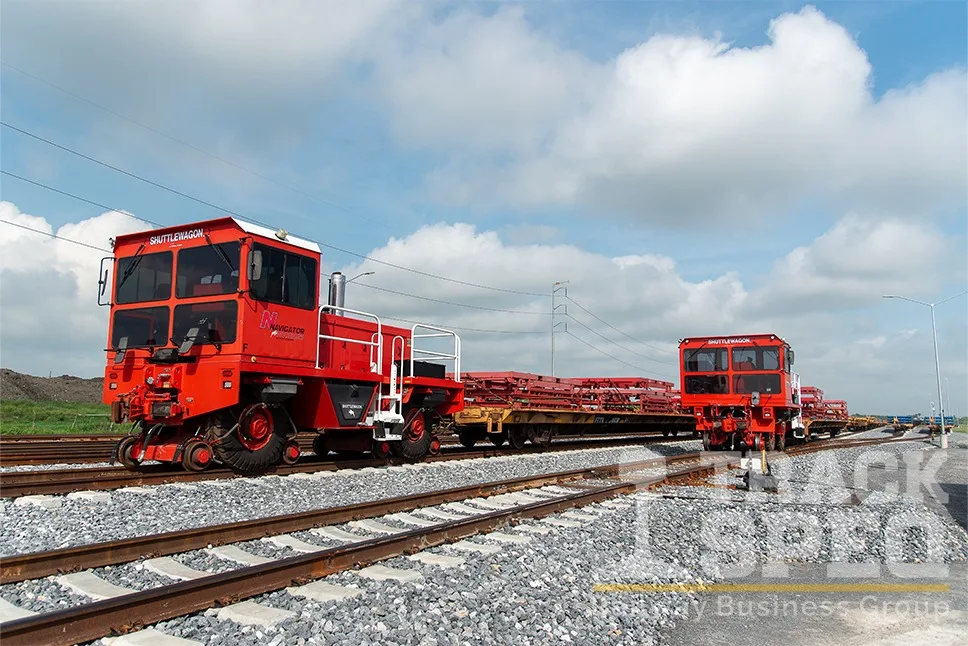
When an industrial terminal misses a loading window because of a slow switching move, the problem is rarely just the equipment. It’s usually a poorly planned purchasing decision. When it comes to railcar movers for sale, choosing on price or immediate availability can be costly if the equipment doesn’t match the real operation, the work environment or the level of support that rail continuity demands.
For an operations, engineering or technical procurement manager, the right question isn’t which railcar mover costs less, but which solution keeps railcars flowing with safety, availability and cost control over time. That changes the commercial conversation completely. It’s no longer about acquiring a machine, but about securing switching capacity within an industrial operation where every stoppage affects production, shipments and customer service.
Railcar movers for sale with an operational focus
Buying a railcar mover should start from the switching operation, not the catalog. Some plants move a few railcars a day, over short distances and on simple routes. Others operate terminals with heavy traffic, multiple turnouts, grades, internal crossings and very tight time requirements. In both cases we’re talking about railcar movers, but the technical solution can be very different.
A common mistake is sizing the equipment based on the theoretical maximum load rather than the full usage pattern. Switching frequency, track condition, available adhesion, railcar type, turning space, coexistence with pedestrians and trucks, and even work shifts all change the right specification. Oversized equipment ties up capital. Undersized equipment creates bottlenecks, premature wear and operational risks.
That’s why, in serious railcar mover sales processes, the diagnostic stage carries as much weight as the offer itself. If the terminal’s context isn’t understood, any proposal is incomplete.
What to evaluate before buying
Real pulling capacity, not just nominal
The advertised capacity figure is important, but it’s not enough. It’s worth checking the conditions under which it is stated: track type, grade, curve radius, rail condition and load configuration. Usable capacity in the field can vary significantly from the spec-sheet figure.
Seasonality should also be analyzed. Some operations double their moves during peak season and require more intensive cycles. If the equipment is purchased for the average rather than a reasonable peak, the result will be a constrained terminal precisely when it most needs to respond.
Operating environment and safety
A railcar mover works within an industrial ecosystem. It doesn’t just move railcars; it interacts with personnel, internal crossings, docks, loading areas and road traffic. That’s why visibility, ergonomics, braking systems, traction control, alarms, lighting and stability during slow maneuvers must be reviewed.
Safety isn’t a commercial add-on. It affects productivity, compliance and risk exposure. Properly configured equipment reduces corrective moves, improves operator control and reduces incidents in the yard.
Maintenance and availability
This is usually where the real cost of the project is defined. Two units with similar performance can behave very differently if one has spare parts, technical diagnostics and local support, and the other depends on long import lead times or limited service.
For an industrial buyer, the critical variable is availability. If the railcar mover is central to internal rail logistics, any unplanned stoppage can jeopardize receipt of raw materials or shipment of finished goods. That’s why it’s wise to demand clarity on preventive maintenance, response times, spare parts inventory and training for operators and technicians.
Compatibility with existing infrastructure
Not all terminals are in ideal condition. There are tracks with demanding radii, yards with space constraints, crossings with industrial pavements and areas where railway rehabilitation is still underway. The equipment must be evaluated in relation to that reality.
In some cases, buying the right railcar mover without addressing track condition only shifts the problem. If the infrastructure limits switching, the solution may require design adjustments, targeted rehabilitation or changes in operation. This is one of those scenarios where it pays to work with a supplier that understands both the equipment and the railway infrastructure.
Total cost matters more than purchase price
In mature industrial environments, buying on price solves almost nothing anymore. The useful criterion is total cost of ownership. That includes acquisition, commissioning, training, consumption, maintenance, spare parts, service life, residual value and, above all, the cost of downtime.
A cheaper railcar mover may look attractive during the approval phase, but lose its appeal if it requires frequent stoppages, constant adjustments or hard-to-find outside support. The same goes for highly advanced equipment that isn’t justified for simple operations. The right balance depends on the intensity of use and the financial impact of an interruption.
When total cost is modeled properly, the decision becomes more technical and less reactive. It’s no longer about comparing one initial invoice against another, but about the equipment’s ability to sustain the operation for years with predictable levels of performance and service.
Railcar movers for sale and after-sales support
In this market, after-sales shouldn’t be treated as an accessory service. It’s part of the product. A railcar mover without sufficient technical backing can become a hard-to-maintain asset, especially in operations where switching leaves no room for improvisation.
The value of a specialized supplier lies in supporting the entire cycle: selection, specification, commissioning, training, maintenance, spare parts and incident resolution. If the supplier also knows the regulations, industrial rail operations and terminal needs, communication is much more efficient.
For many companies, this approach reduces internal friction. Procurement doesn’t have to coordinate with a salesperson on one side, an outside technician on another and a separate railway contractor. Response speed improves and gray areas of responsibility shrink. This full-service model is especially useful in expansion projects, yard modernization or the addition of new freight lines.
When to buy and when to review the operation first
Acquiring new equipment isn’t always the immediate answer. In some cases the real problem lies in the switching sequence, track capacity, yard condition or a lack of scheduled maintenance. If that isn’t corrected, even a top-tier railcar mover will operate below its potential.
There are also scenarios where accelerating the purchase does make sense: sustained growth in moves, excessive dependence on third parties, bottlenecks in loading and unloading, or the need for greater operational control within the plant. When rail switching directly affects production or service levels, having your own equipment can improve times, predictability and safety.
The practical criterion is simple. If the bottleneck is switching capacity, the purchase can generate a clear return. If the bottleneck is in the infrastructure or the process, it’s best to solve that first or at the same time.
What an industrial buyer expects from a serious supplier
A B2B buyer doesn’t need generic pitches. They need data, specification criteria and responsiveness. They expect a proposal built around their operation, with clear assumptions, defined scopes and verifiable support.
That means speaking precisely about capacity, working conditions, safety, maintenance, training and response times. It also means acknowledging nuances. Not all terminals need the same solution, and not all justify the same level of investment. A technical recommendation gains credibility when it distinguishes between what is necessary and what is optional.
In a specialized market like this, industry experience counts. A supplier that understands industrial yards, railway expansions, track materials, operational compliance and railcar switching provides a more useful perspective than a simple equipment distributor. Track Speq operates precisely at that point of integration between infrastructure, equipment and support, which is where many complex decisions start to fall into place.
A well-planned railcar mover purchase doesn’t begin with a spec sheet or end with delivery. It begins with a precise reading of the operation and continues with support capable of sustaining results. If rail switching is critical to your business, the best purchase will be the one that reduces uncertainty from the first move through the maintenance of the last shift.
